Headphones In, Wallet Out: How Casino Soundscapes Are Quietly Running Your Bets

Here's a question worth sitting with for a second: when did you last play a slot with the sound completely off?
Probably not recently. And that's not an accident.
The audio in online casino games — the jingles, the build-ups, the coin-drop sounds, the thumping background beats — isn't thrown together by some intern with GarageBand. It's the product of deliberate, research-backed design. Game studios spend serious money on sonic architecture, and the goal isn't to entertain you. It's to keep you in your seat, raise your pulse just enough, and nudge your bets upward without you consciously registering why.
If you're playing at HellSpin with your headphones cranked up, this one's for you.
Why Audio Hits Different Than Visuals
Here's the thing about sound — it bypasses a lot of your rational thinking. Visual cues require your brain to process and interpret them. Sound, particularly rhythm and tone, plugs straight into your emotional and physiological responses.
Researchers have found that faster tempo music increases heart rate, creates a sense of urgency, and shortens the perceived gap between decisions. In a casino context, that means less time pausing between spins. Less pausing means more spins per hour. More spins per hour means your bankroll moves faster — usually in one direction.
Slow, ambient music does something different but equally calculated. It relaxes you, lowers your guard, and makes the experience feel safe and comfortable. You stay longer. You lose track of time. You forget you were going to stop after the next spin.
Both approaches work. They just work differently depending on the game and what the designers want from you.
The Specific Tricks You're Not Noticing
The Win Jingle Inflation Problem
This one is enormous and almost nobody talks about it. When you score a win — even a tiny one, like getting back 30 cents on a $2 spin — the sound design celebrates like you've just won Powerball. Coins cascade. Music swells. There's often a little fanfare.
Your brain, bless it, responds emotionally to that celebration before it does the maths. By the time you consciously register that you actually lost $1.70 on that spin, the dopamine has already fired. You feel like a winner. You spin again.
This is sometimes called the "losses disguised as wins" effect, and it's one of the most well-documented psychological mechanisms in modern slot design. The audio is doing most of the heavy lifting.
Near-Miss Sounds Are a Different Beast Entirely
When two jackpot symbols land and the third just misses, a lot of games play a very specific type of audio — something tense, rising, almost-there. It's engineered to feel like you nearly made it, which triggers a response closer to a win than a loss in your brain.
The sound tells your nervous system: keep going, you're close. Your nervous system believes it. You keep going.
Tempo Matching Your Bet Size
Some more sophisticated games subtly shift their background tempo as stakes increase. Higher bet levels come with slightly more urgent, energetic audio. It's a positive reinforcement loop — bigger bets feel more exciting because the sound tells you they are. You're being trained, essentially, to associate higher stakes with a better experience.
Which Types of HellSpin Games Do This Most Aggressively?
Not all games are created equal when it comes to audio manipulation. Generally speaking:
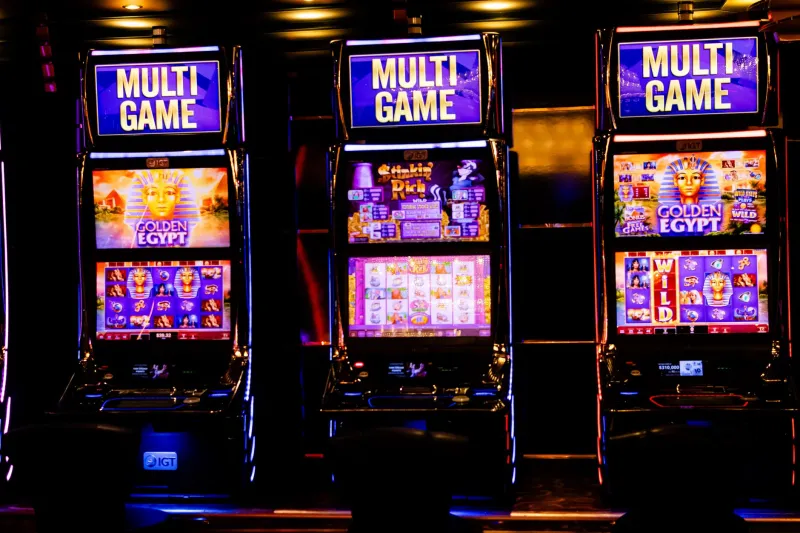
High-volatility slots tend to use dramatic, cinematic audio with long build-ups and explosive win sounds. The silence between spins can feel tense, which keeps you on edge and chasing the next big moment.
Branded and themed slots — think games built around mythology, adventure, or pop culture — use licensed or custom music that creates emotional attachment to the game itself. You're not just playing a slot; you're in a world. Leaving that world feels like a loss even before you check your balance.
Classic fruit machines often use retro jingles that trigger nostalgia responses. That cheerful, familiar sound pulls on something older in your brain — pub pokies, simpler times, the feeling of a good night out.
Live table games are interesting because they use ambient casino floor sounds — chips shuffling, dealer voices, background murmur — to replicate the social atmosphere of a real casino. It's designed to make you feel like you're somewhere, not just staring at your phone on the couch.
How to Actually Notice When It's Happening to You
The tricky part is that audio influence is largely subconscious. You can't just decide to ignore it the way you might ignore a pop-up ad. But you can build awareness that creates a bit of distance between the stimulus and your response.
Try this: Next time you're mid-session and you feel a sudden urge to increase your bet or keep spinning after you'd planned to stop, pause. Ask yourself what just happened on screen and what you heard. Was there a near-miss sound? A big win jingle on a net-loss spin? A tempo shift?
You don't have to be paranoid about it. Just curious.
Mute the game occasionally. Play a few spins in silence and notice how different the experience feels. Slower. Less urgent. Easier to think clearly. That difference is the audio doing its job.
Set a timer, not just a budget. Because audio manipulation primarily works by distorting your sense of time, a hard time limit is often more effective than a dollar limit alone. When the timer goes off, the music stops — regardless of what the game is playing.
Watch your bet size over time. Not just your total spend, but whether your individual bet sizes have crept up during a session. If you started at $1 a spin and you're now at $3 without a conscious decision to increase, something nudged you there. Audio is a prime suspect.
This Isn't About Blaming Anyone
Look, game studios aren't evil for doing this. Audio design is part of making an entertaining product, and most of what they do sits in a grey zone between good UX and psychological nudging. The sounds that make a win feel satisfying are also just... good game design. Not every jingle is a manipulation.
But knowing the mechanics gives you something valuable: agency. When you understand that a 30-cent return on a $2 spin shouldn't feel like a win regardless of how the soundtrack reacts, you're playing smarter. When you know that the rising tempo is engineered to excite you, you can appreciate it without being owned by it.
At HellSpin, the games are genuinely fun — the audio included. But fun and sharp are not mutually exclusive. You can enjoy the full sensory experience of a well-designed slot while still being the one in control of your decisions.
Headphones in. Eyes open. Wallet intact.
That's the play.