Sorry Mate, That Slot Isn't 'Due' — The Cold Hard Truth About Hot Machines
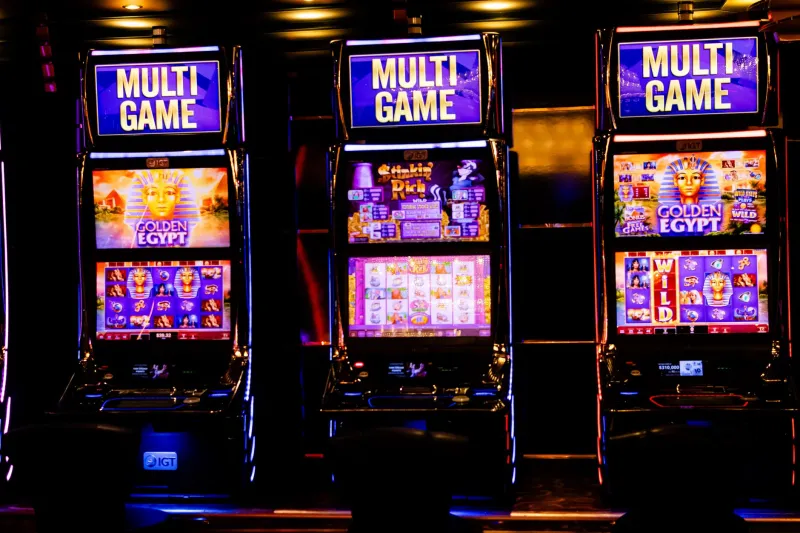
Picture this. You're at a gathering, and someone sidles up with that knowing look — the one that says they're about to let you in on something massive. "Nah, trust me," they whisper, nodding toward a particular slot. "That machine's been eating money all night. She's about to blow."
You've heard it before. Maybe you've even said it yourself. It's one of those ideas that feels so sensible, so logical, that questioning it seems almost rude. But here's the uncomfortable reality: that mate of yours has absolutely no idea what they're talking about. And if you act on their advice, your bankroll is going to pay the price.
Let's break down exactly why the 'hot machine' theory is one of the most persistent — and costly — myths in Australian gaming culture.
What People Actually Mean by a 'Hot' Machine
When players talk about a hot machine, they're usually describing one of two things. Either it's a slot that's recently paid out a few wins in a row, making it seem like it's in a generous mood. Or it's one that hasn't paid out in ages, leading people to believe it's "due" for a big hit.
Both interpretations come from the same flawed place: the assumption that a slot machine has some kind of memory. That it tracks what it's done recently and adjusts its behaviour accordingly. That wins and losses exist in some kind of cosmic balance that will eventually correct itself in your favour.
It's a deeply human way to think. We're pattern-recognition machines. Our brains are wired to find order in chaos, to spot trends, to predict what comes next. It's served us brilliantly as a species. At the slots, though, it's working completely against you.
The Random Number Generator Doesn't Care About Your Theory
Every modern slot — whether you're playing at a venue or spinning online at HellSpin — runs on a Random Number Generator, or RNG. This is a sophisticated algorithm that produces thousands of number combinations every single second, completely independently of anything that has happened before.
When you hit that spin button, the RNG grabs whichever number it's currently on and converts that into a reel outcome. The symbols you see are just a visual translation of a number that was already determined before the reels even started moving.
Here's the critical bit: the RNG has no memory. None. It doesn't know the machine just paid out three times in a row. It doesn't know it's been forty minutes since the last win. It doesn't know you've been sitting there for an hour nursing the same drink, convinced your patience is about to be rewarded.
Every single spin is statistically independent. The odds of winning on your next spin are exactly the same as they were on your first spin, regardless of everything that happened in between.
The Gambler's Fallacy in an Akubra
What we're really talking about here is the Gambler's Fallacy — the belief that past random events influence future ones. It's the same thinking that makes people bet on red after a roulette wheel has landed black five times in a row.
In Australia, this fallacy has taken on a distinctly local flavour. We've got a strong pub culture around gaming, and with that comes a rich oral tradition of slot "wisdom" passed down from punter to punter. The bloke who swears he's cracked the code. The regular who has a "system." The group of mates who collectively decide which machine is hot based on nothing more than vibes and wishful thinking.
It's entertaining, genuinely. But it's also expensive if you start making real financial decisions based on it.
The maths doesn't bend for folklore. A slot with a 96% RTP (return to player) will return 96 cents for every dollar wagered over an enormous number of spins — but that average is calculated across millions of plays, not your particular session. In the short term, anything can happen, which is exactly what makes those recent wins feel meaningful when they're actually just noise.
Why the Myth Feels So Believable
Here's what makes the hot machine idea so sticky: sometimes it appears to work.
You sit down at a machine that's supposedly running hot, and you hit a decent win. That moment gets filed away as evidence. The hundred times it didn't work? Those fade. This is selective memory operating in real time, and our brains do it automatically.
Casinos — online and land-based — are also environments designed to heighten emotional responses. Lights, sounds, near-misses, and small frequent wins all create an atmosphere where pattern-finding feels rewarding. When you're in that headspace, the hot machine theory doesn't just seem plausible. It feels like genuine insight.
Add in social reinforcement — your mates nodding along, someone actually winning after following the tip — and you've got a belief system that's very hard to shake with something as dry as statistics.
What You Should Actually Pay Attention To
So if machine "temperature" is meaningless, what actually matters?
RTP percentage. This is the one number worth knowing. A slot with a higher RTP gives you better theoretical value over time. At HellSpin, this information is available for every game — use it.
Volatility. High-volatility slots pay out less frequently but in larger amounts when they do. Low-volatility games pay smaller wins more often. Understanding which type you're playing helps you set realistic expectations and manage your session accordingly.
Your own bankroll limits. No amount of hot-machine theory will protect you like a firm spending limit will. Decide what you're comfortable losing before you start, and stick to it regardless of what the bloke next to you reckons.
Game features. Bonus rounds, multipliers, free spins triggers — these are the actual mechanics that create variance in your sessions. Understanding them gives you a real edge in terms of choosing games that match your playing style.
The Bottom Line
That slot everyone's buzzing about at the pub? It doesn't know it's popular. It doesn't know it's supposed to pay out. It's running the same algorithm it always runs, producing random outcomes with the same probability it had yesterday, last week, and last year.
The hot machine myth is compelling because it gives us a sense of control in a game that's fundamentally about chance. It makes the randomness feel navigable. But acting on it is just superstition dressed up as strategy.
Play the games you enjoy. Understand the actual mechanics. Set limits that protect your wallet. And the next time someone at the pub leans in with a hot tip about which slot is about to drop — smile, nod, and quietly order another drink instead.