Almost Doesn't Count — Or Does It? The Science Behind Why Near-Misses Keep You Spinning
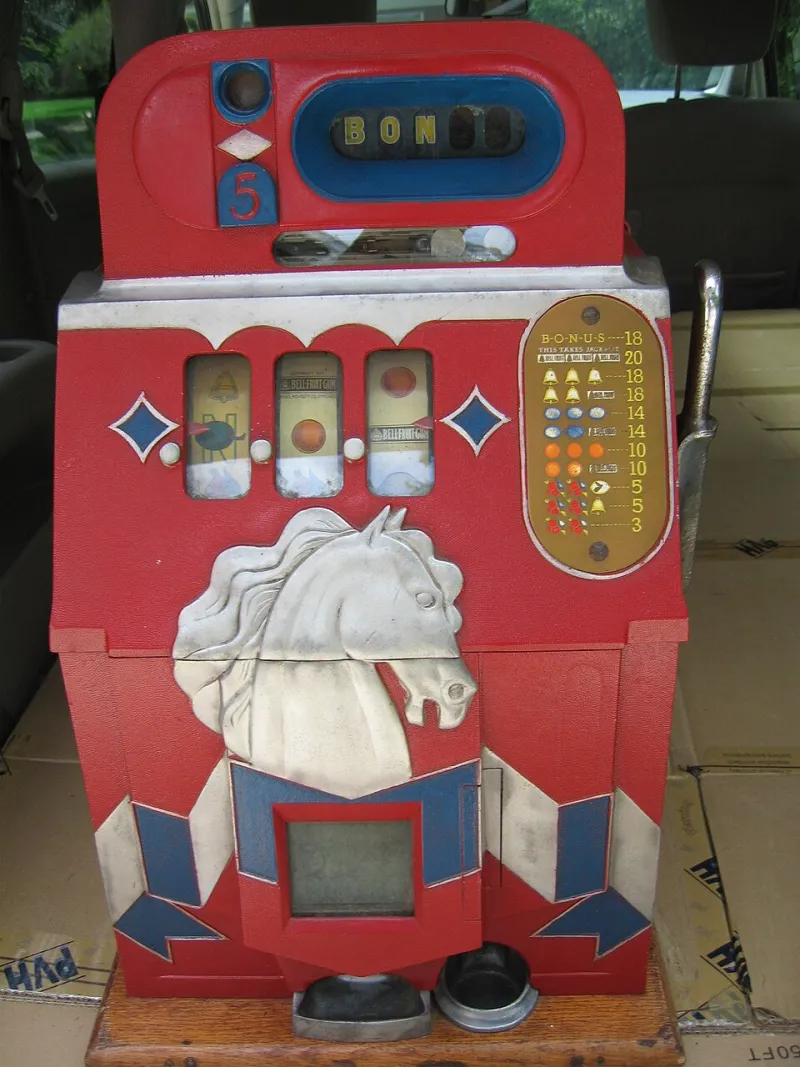
Photo: Gameroom Show, https://www.gameroomshow.com/faq/#Copyright, CC BY-SA 4.0, via Wikimedia Commons
You've been there. Two wild symbols locked in, the reels still spinning, your pulse doing something it has no business doing at 11pm on a Tuesday. Then the third reel settles — one symbol off. So close. Your brain screams that was nearly it, and before you've even processed the loss, your finger's already hovering over the spin button again.
This isn't a coincidence, and it's definitely not bad luck. It's psychology — and understanding it might be the most useful thing you ever do as a player at HellSpin AU.
What Actually Happens in Your Brain During a Near-Miss
Researchers have been studying near-miss effects in gambling contexts since the late 1980s, and the findings are pretty wild. A near-miss — where the outcome falls just short of a win — activates many of the same neural pathways as an actual win. Brain imaging studies show that your dopamine system responds to a near-miss with a burst of activity that looks surprisingly similar to the reward response triggered by success.
In plain terms: your brain partially treats almost winning as winning. Not completely, but enough to generate motivation, excitement, and — crucially — the urge to try again.
Psychologists call this the "near-miss effect," and it's been documented across everything from poker machines to footy tipping comps. It's not unique to gambling, but it's particularly potent in slot-style games because the visual feedback is so immediate and so close to a win state.
The Slot Machine Is Designed Around This Feeling
Here's where it gets interesting for players who want to be strategic about their sessions. Modern video slots — including many of the titles you'll find at HellSpin — use something called "weighted reel mapping." High-value symbols, particularly jackpot symbols, appear more frequently on the reels just above and below the payline than they do on the payline itself.
This means near-misses are more common than pure probability would suggest. The game is engineered to show you the jackpot symbol close to where it needs to land, more often than random chance alone would produce. Regulators in Australia have rules around how this works, but the principle remains: that near-miss feeling isn't accidental. It's baked into the product.
Knowing this doesn't make the experience less exciting — honestly, it might make it more interesting. But it does reframe what a near-miss actually means. It's not a sign you're "due" a win. It's a feature of the game's design.
Why Aussies Are Particularly Susceptible
Australia has one of the highest rates of recreational gambling participation in the world, and culturally, there's a deeply ingrained "have a go" mentality around gaming. Whether it's the races, the footy tipping office pool, or a few spins on a Friday night, Australians tend to frame gambling as entertainment rather than investment — which is healthy — but that same optimistic outlook can make the near-miss effect hit harder.
When you're already in a "good things happen if you try" headspace, your brain is primed to interpret near-misses as evidence that success is imminent. It's the same cognitive bias that makes Australians genuinely believe their AFL team is a chance every single year, even after three wooden spoons in a row.
There's no shame in it. It's human. But being aware of it gives you an edge.
Real Player Experiences: What HellSpin Community Members Say
Talk to regular players in the HellSpin community and the near-miss experience comes up constantly. One player from Brisbane described hitting two scatter symbols on a bonus feature — needing three — on back-to-back spins: "I genuinely thought the third one was coming. Like, logically I know it doesn't work that way, but it felt inevitable. I ended up extending my session way longer than I planned."
Another player, a Melbourne-based table game regular who also dabbles in slots, put it this way: "Near-misses in blackjack feel different to me than in slots. In blackjack, if I bust on 22 when the dealer shows a six, I'm annoyed at myself. In slots, a near-miss feels like the machine is teasing me. It's weirdly more personal."
That distinction is worth sitting with. In skill-based games, near-misses often feel like feedback — something to learn from. In pure-chance games like slots, they feel like communication, even though the machine isn't communicating anything meaningful at all.
What This Means for Your Strategy at HellSpin
Okay, so you can't rewire your dopamine system before you log in. But you can use this knowledge to play smarter. Here's how:
Set session limits before you start, not after a near-miss. The moment after a close call is the worst time to make decisions about how long to keep playing. Your brain is flooded with motivation and the near-miss has reinforced the feeling that a win is close. Decide your limits in advance and stick to them.
Recognise the emotional signature. When you feel that specific mix of frustration and excitement after a near-miss, name it. Literally think: "That's the near-miss effect." This small act of labelling can create just enough psychological distance to make a rational decision rather than an impulsive one.
Track your sessions, not your near-misses. It's easy to walk away from a session thinking "I nearly had it three times" and feel like you were unlucky. But near-misses aren't luck indicators — they're game mechanics. Judge your session by your budget management and enjoyment, not by how many times the symbols almost lined up.
Use HellSpin's responsible gaming tools. The platform has deposit limits, session reminders, and cool-off options built in for exactly this reason. They're not there to cramp your style — they're there because the platform knows how engaging these games are designed to be.
The Takeaway
Near-misses are one of the most fascinating intersections of game design and human psychology in the entire gaming world. They're not a sign the universe is warming up to give you a jackpot. They're a feature that makes slots engaging — sometimes brilliantly, sometimes frustratingly so.
Playing at HellSpin AU should be a good time. Understanding why your brain responds the way it does to near-misses doesn't take the fun out of spinning — it just means you're the one in control of your session, not the other way around. And honestly? That's a better feeling than almost winning.